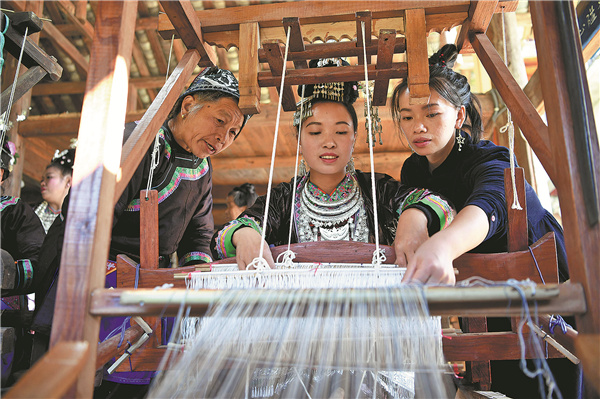
Dong Cloth
Introduction
Dong cloth, a traditional handmade fabric produced by the Dong ethnic group in southwestern China, is characterized by its deep indigo color and intricate craftsmanship. More than just a textile, it represents Dong identity, heritage, and family connections. Its production involves a labor-intensive process of hand-spinning, weaving, dyeing, and finishing using natural materials. Valued for its softness, breathability, and durability, Dong cloth is recognized in China as a form of national-level intangible cultural heritage, reflecting the Dong people's rich traditions and artistry.
History
The history of Dong cloth extends back over a millennium, deeply interwoven with Dong culture. Traditionally, Dong women learned weaving and dyeing as a vital skill. The fabric was used for daily wear and ceremonial attire, signifying a connection to their heritage.
Historically, Dong people utilized natural resources for textile production, with indigo dye from plants like Strobilanthes cusia being central to their dyeing. The resulting "liangbu" (bright cloth) is known for its durability and subtle sheen. Traditional methods have been passed down through generations, evolving over time.
Recently, there have been increasing efforts to revive and promote Dong cloth, with artisans and cooperatives working to broaden its appeal. Its unique aesthetic and cultural significance have attracted interest both domestically and internationally.
Production Process
The creation of Dong cloth is a multi-stage process requiring skill and precision, encompassing material selection, weaving techniques, and dyeing methods.
Material Selection: Cotton, often locally grown, is the primary material, chosen for its softness and durability. It's cleaned and spun into yarn using traditional spinning wheels, a step crucial to the final fabric's quality. Natural dyes are significant, with indigo derived from plants like Strobilanthes cusia being most common. Other plant-based dyes from persimmon, safflower, and mugwort are also used.
Weaving Techniques: Yarn is woven on a traditional wooden loom, interlacing warp and weft threads to create a durable structure. Patterns are often inspired by nature, featuring motifs like flowers, animals, and geometric shapes. The process can take weeks or months, demanding consistent tension and alignment.
Dyeing Methods: The fabric is dyed with natural indigo through a fermentation and oxidation process. The fabric is repeatedly dipped in the dye bath and exposed to air to gradually develop the color. This process is repeated to achieve the desired shade, followed by sun-drying and pounding to enhance the fabric's sheen, texture, and durability.
Regional Variations
Dong cloth production is concentrated in Guizhou, Hunan, Hubei, and the Guangxi Zhuang autonomous region. Each region exhibits variations in patterns, colors, and techniques, reflecting local culture and environment. For example, Guizhou is known for intricate patterns and vibrant colors, while Hunan often features simpler designs. Guangxi is notable for natural dyes and innovative weaving techniques. These regional differences contribute to the richness and diversity of Dong cloth.
Preservation and Promotion
Efforts to preserve and promote Dong cloth production have increased, involving collaborations between artisans, cooperatives, and local governments to prevent the loss of this craft to modernization. Initiatives like workshops, training programs, and cooperatives provide platforms for artisans to showcase their skills and transmit their knowledge.
The Dousa Women's Cooperative, founded by designer Jenny Chou, preserves traditional techniques and encourages innovation by incorporating modern designs. This has helped Dong cloth gain recognition in the fashion industry.
Promotion has extended to international markets, increasing demand and raising awareness of the Dong people's cultural heritage. The revival of Dong cloth has created jobs, improved livelihoods, and fostered a sense of pride within local communities, ensuring the cloth continues to thrive.








